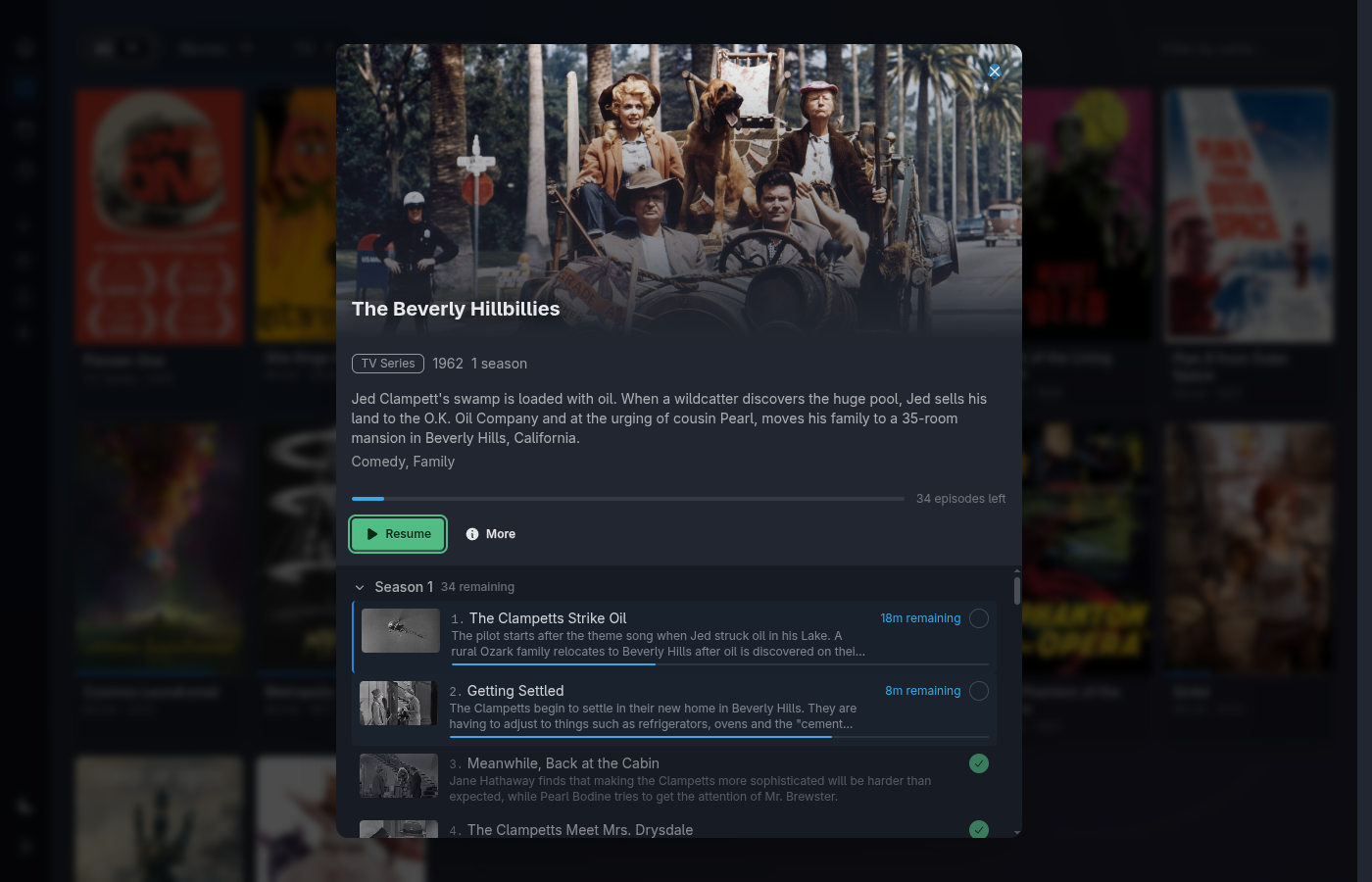
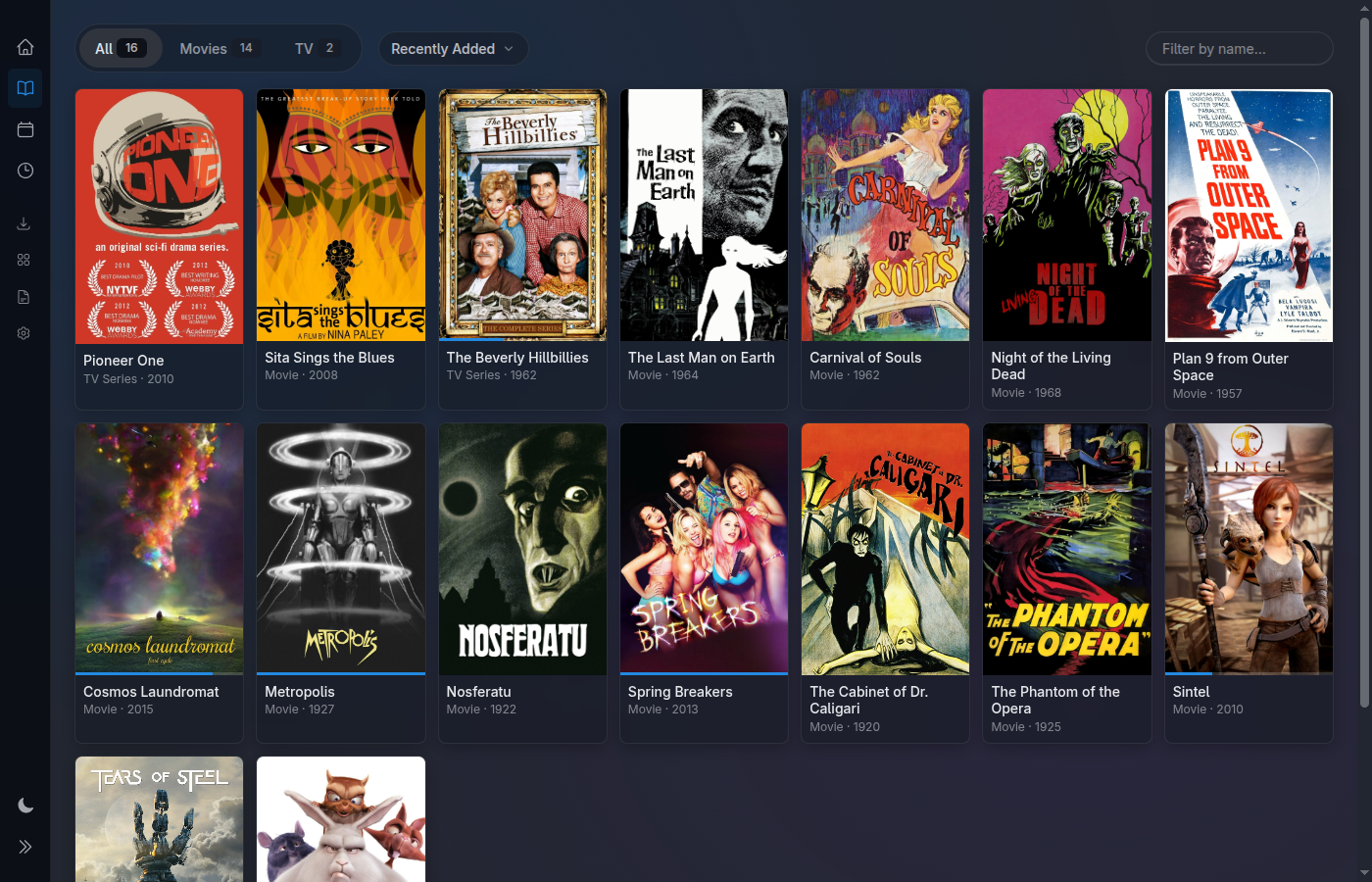
Media Centaur watches your video directories, reads release-style filenames, and identifies every movie and TV show via TMDB — then pulls the artwork. High-confidence matches land in your library; anything ambiguous waits in review.
You drop a file in a watched directory and walk away. Media Centaur does the parsing, the lookup, the artwork, and the bookkeeping — and it knows when not to trust itself.
A filesystem watcher catches new and changed files the moment they appear. The parser reads
release-style names — Sample.Show.S01E01.1080p.WEB-DL.mkv — and queries TMDB to pin
down the exact movie or episode, season and all.
Once a title is identified, Media Centaur downloads the posters, backdrops, and episode stills and caches them locally. The grid fills with real artwork — no placeholder tiles, no waiting on a remote image host at render time.
Identification is confidence-gated. A clean, unambiguous match goes straight to the library. Anything uncertain — a sparse filename, two plausible titles — lands in a review queue instead of silently polluting your collection. You confirm; it commits.
Each entity knows the actual files backing it on disk. Rename a file, move it to another watched directory, or delete it — the library follows. Movies and multi-season TV alike stay in sync with what's really there.
Every file walks the same four steps. The branch at the end is the whole point: certainty earns a spot on the shelf, doubt earns a second look.
Filesystem events flag a new or changed file in a watched directory.
The release-style filename is parsed into a title, year, season, and episode.
TMDB returns candidates; Media Centaur scores how confident the match is.
High confidence → straight into the library. Ambiguous → the review queue.
When Media Centaur isn't sure, it shows you the file, the candidates it found, and the confidence behind each — and lets you make the call. Confirm the right match and it commits to the library; reject it and the file waits without ever entering your collection on a hunch.
A TV show isn't one record — it's seasons, episodes, and the real files behind each one. Media Centaur keeps the map current: a present episode shows up, a missing one is visibly absent, and a moved file is re-linked rather than re-imported.
Because the library reflects what's actually on disk, renames, moves, and deletions just work. The shelf is a view of your directories, kept honest by the same watcher that filled it.
Launches mpv locally, resumes where you left off, auto-advances, world-class subtitles.
Learn moreMonitors TMDB daily for upcoming movies and new seasons of the shows you own.
Learn moreSearch and queue downloads via Prowlarr. Entirely optional; bring your own indexers.
Learn moreKeyboard and mouse at the desk, gamepad or remote on the couch. Large artwork, dark-first.
Learn moreEvery change appears instantly via Phoenix LiveView. No polling, no refresh button.
Learn moreThe whole pipeline, end to end — discovery, import, image fetching, and the data model behind it.
Learn moreOne line installs the latest release, verifies its checksum, and sets up a user service. Linux x86_64 is the primary, fully-supported platform; macOS Apple Silicon is experimental.
curl -fsSL https://raw.githubusercontent.com/media-centaur/media-centaur/main/installer/install.sh | sh